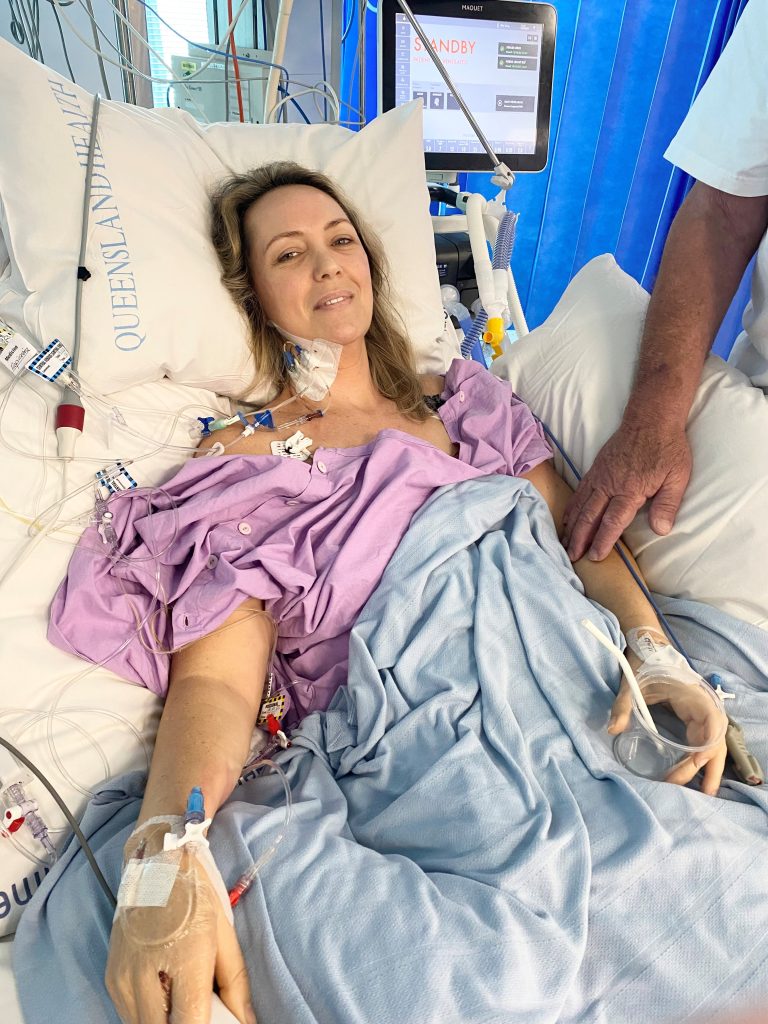
Tiffany collapsed at home after losing two litres of blood and was rushed to the Emergency Department, where she required five units of blood.
Despite these alarming signs, she was told it was “likely a burst haemorrhoid” and prepared to send her home.
“They said it was a one-off event and to go home,” Tiffany said.
Her symptoms, severe rectal bleeding, fatigue, and rapid health decline, were clear red flags. Yet, when Tiffany asked for a colonoscopy, she was told there would be a six to nine month wait in the public system.
Determined to get answers, Tiffany invoked Ryan’s Rule, a Queensland initiative that allows patients to escalate concerns when their condition is worsening. After intense negotiations, she secured a colonoscopy within two weeks.
“If I hadn’t pushed, I wouldn’t be here today,” she said. “And this was despite having a family history of bowel cancer.”
Unfortunately, the procedure revealed advanced bowel cancer. Tiffany underwent radiation and chemotherapy in 2022 and now faces ongoing monitoring with regular scans.
Her experience underscores a critical issue across Australia: symptoms dismissed because of age and gender.
“Bowel cancer is increasingly impacting younger Australians, and assumptions based on age and gender can cost lives,” Tiffany said. “I urge all GPs, who are on the frontline of early detection, to take the time to engage with Bowel Cancer Australia and their great materials and courses to assist with early diagnosis.”